Dear Family and Friends,
I only have two months of AmeriCorps to go, so I encourage you to read this update slowly to help pull you through the final weeks of misery and meaninglessness that have surely characterized your life since my departure. Last week I returned to Iowa after a very gratifying seven week stint as a camp counselor for the Sherman Lake YMCA in Augusta, Michigan. But more about that in a second…
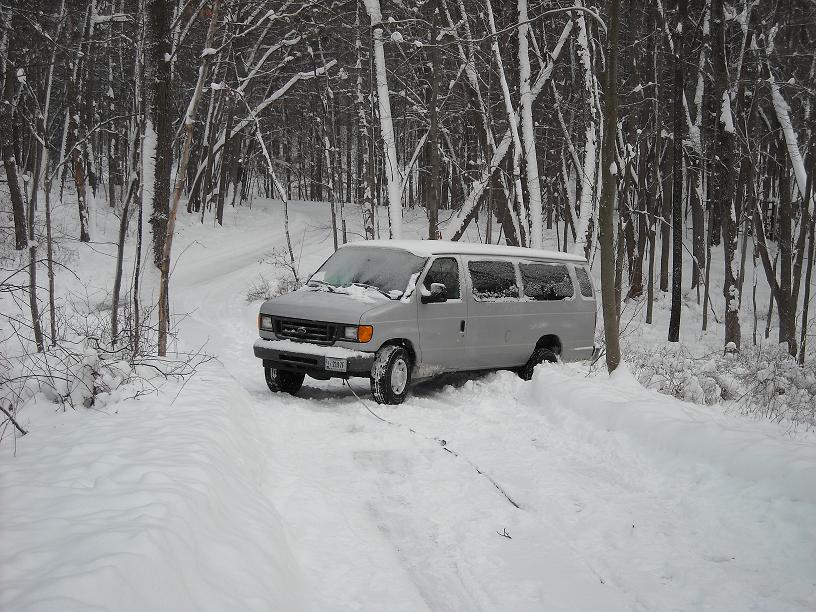 …First, some mandatory Californian complaints about the Midwestern weather. The first several weeks we were in Michigan it was consistently under ten degrees, often dipping well below zero, with fresh snow falling every day. Our “pod” – basically a cabin with a kitchen where we stayed when we didn’t have campers – was up a steep, icy slope. After getting our van stuck perpendicular to the road twice, we were forced to park at the YMCA – a ten minute trudge from the pod through the snow – for the rest of our stay. These conditions made motivating ourselves to leave the pod a real challenge, but given our limited entertainment opportunities (there are only so many times you can watch “Without a Paddle” staring Seth Green without putting your foot through the television), we tried to bundle up and make it out to downtown Kalamazoo as much as possible. I hate to toot my own horn, but I think something about an intoxicated Californian without boots or snow pants sprinting doggedly up a hill in shin-deep snow at 2 a.m. with a quesadilla on her mind just screams “rugged determination”.
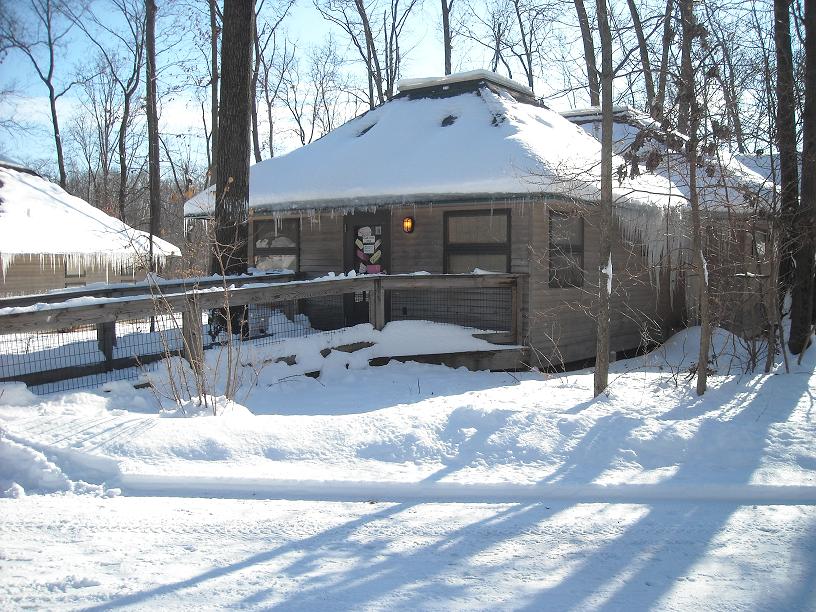 I eventually got used to the cold and became one of those disgusting people who wears short sleeves outside when it’s thirty degrees and talks enthusiastically to other inappropriately dressed strangers about the lovely weather. I was in good company amongst the Michiganders though; one week it got up to fifty and the program directors began making frantic announcements in the mess hall about staying hydrated during the heat wave. I seriously contemplated shoveling a spot near our cabin so I could lay out.
After my acclimation, I had a phenomenal time in Michigan. My team worked for the YMCA’s Integrated Education (IE) program which offers camps focused on character development to local middle school groups. The basic idea of IE is to use traditional camp activities such as rock climbing, art, swimming, team building and outdoor survival skills as a platform to demonstrate and reinforce the camp’s four central principles of Honesty, Caring, Respect and Responsibility (or HCRR – pronounced “hicker” – as we called it at camp). Each camp activity is briefed and then debriefed with a discussion about how HCRR can be used in that particular situation, and as counselors, our job was to role model these principles and constantly praise our campers’ use of them. I know the premise sounds a little corny, but the kids love it, and it is an amazingly effective program that has yielded tangible results for participating schools such as higher test scores and fewer disciplinary problems.
The first week we were in Michigan we attended a conference of camp directors being put on by the YMCA as part of our training. Prior to the conference my primary concern about working with children was misplacing them or perhaps losing part of one, like a leg or an eye. It wasn’t until I sat through a week of presentations by world famous child whisperers that it occurred to me how irrevocably I could damage a kid with just one poorly conducted conversation. As a person who hadn’t actually talked to a child since being one and even then not to critical acclaim, the thought of not only being entrusted with safety of ten girls, but also responsible for their self-esteem, manners and character development was very daunting. Three hours of mandatory YMCA videos depicting campers drowning, burning and being sexually molested by their peers didn’t help my confidence any. Furthermore, those of you who know me well know I’m not a particularly zany, bubbly or animated person, all of which seemed to be camp counselor prerequisites. I was immediately catapulted miles from my comfort zone.
The Saturday before we got campers for the first time we volunteered at a museum in Kalamazoo doing arts and crafts with children. I looked at this as a good opportunity to practice my youth interaction skills and quell my fears about working with these small, foreign creatures and their fragile psyches. What are a child’s interests anyway? Lunchables? Velcro shoes? Making conversation should be a breeze. Each of us got a booth with a vaguely science-related art project – mine involved putting space themed stickers in a cheap magnetic book – and children of all ages shuffled by our folding tables creating pieces of crap their parents would have to cart through the exhibits and eventually throw in the trash. I realized immediately that it is physically impossible for me to speak to kids with the over-the-top enthusiasm of some adults, using inflecting tones and capitalized words while doing expressive things with my eyebrows and mouth. “Look at these CUTE STICKERS! You can put them in these NEAT BOOKS and make your OWN STORY about SPACE! ISN’T THAT FUN!?” I decided I would not patronize children by speaking to them like children. I would give them the dignity of being treated like miniature adults.
The first thing I learned is that children do not really start fully understanding sarcasm, my primary form of adult conversation, until about the eighth grade. When you use sarcasm with children – even playfully – it’s like using sarcasm with unfunny adults – they take you literally and you either come across as mean or stupid. Furthermore, when you try to talk about kid stuff in an adult voice, you sound like a pompous asshole: “Yes Dakota, the way you have arranged your rocket ship stickers as if they are about to collide in intergalactic combat is very interesting indeed.” Needless to say, my museum experience only made me more apprehensive.
As if I wasn’t nervous enough, in the morning before a new school group even arrived we would get a list of the kids in our cabin along with notes from their parents and teachers detailing their allergies, medications, behavior problems and other fun issues such as their propensity for bed wetting, sleepwalking or bullying. Some of my favorite notes included, “Whiner great kid” and “Vomits when excessively excited”. (The positive person I am, I decided to use the latter as a gauge of how fun a counselor I was. Fortunately, I was not fun enough.) A list of ten children in your care is scary enough without having to anticipate an asthma attack.
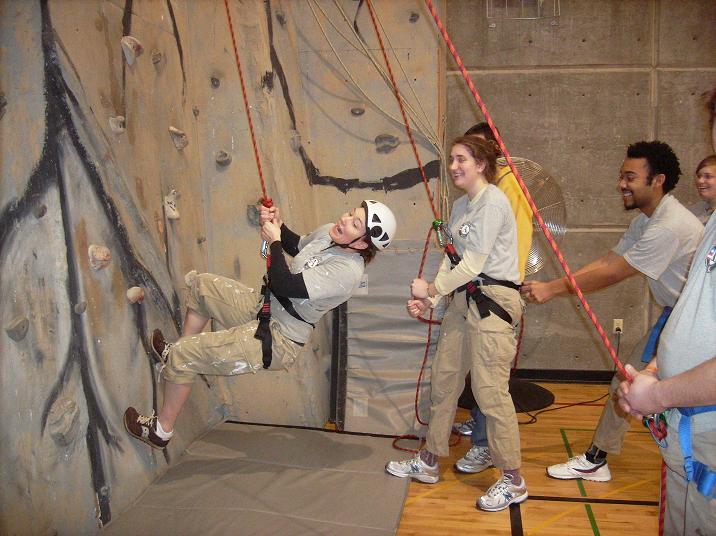 By the end of the second day as a counselor, all my fears were gone. As counselors we slept in the cabins with our kids, ate meals with them and helped supervise their morning and evening activities. From about 11:00 to 5:00 they were with Sherman Lake staff members who conducted their main activities like archery and fire building. We were not required to attend this part of the day but often did anyway since it was a good time to bond with our campers. As a result, when we had kids we often worked twenty hour days, taking just a few hours off in the afternoon to work out, power nap, complain about our annoying campers, or gush about the cute ones that as my teammate Kelsey once creepily put it, “you just want to squeeze a little too hard!” Working in this intensified environment makes you into a childcare expert rather quickly, and despite my initial nervousness, I left Sherman Lake feeling like somewhat of an authority on junior high. Ask me about Hillary Duff. I will blow your mind.
During my time at camp I had groups of fifth, sixth and seventh graders. Fifth graders are my favorite to work with because they still feel and act like kids. Fifth graders beam at you hopefully during the camp introduction because you bumped fists with them when they arrived and now they desperately want you to be their counselor. After a few hours with them they are hugging you and telling you they love you. When someone asks a question to a room full of fifth graders, 99% of their hands shoot up and wave about urgently. When the activity leaders ask which cabin counselor should come to the front to act out a story, they volunteer you with their loudest voices and burst with pride when you’re selected: “Ray-Ray wants to do it!! Ray-Ray raise your hand HIGHER.” (I had to develop a camp nickname because my campers couldn’t pronounce Marea. I thought “Blue” made me sound too much like that weird, dirty hippie counselor, so I had to resort to the prepubescent rapper name. Laugh if you want, but kids remembered it.) To a fifth grader, you are cool simply because you are taller and older.
I don’t know what exactly occurs in the two years between fifth grade and seventh grade that turns these enthusiastic, open-minded little joys into awkward, hormonal terrors, but the transformation is mind-boggling. I was initially very annoyed by the cynical attitudes of girls still rocking braces and Limited Too outfits – “getting a week off school to come play at camp is so very TEDIOUS and I have important text messages to attend to” – but then I remembered that I used to have the lyrics to “I Am A Rock” by Paul Simon taped on the wall above my bed; I too was once a ridiculous, angst-filled adolescent who just needed a little love. I worked hard to build a rapport with these girls even though they didn’t fight over who got to sit next to me at meals like my fifth graders, and it ended up not being so bad.
Even though I became confident as a counselor quickly, I still found the job challenging every single day. Bedtime was definitely one of the most difficult times, no matter how well behaved my group was. Something about sleeping away from home, particularly in a cabin with nine of their friends, makes little girls go insane. They leap from bunk to bunk, they run in circles around the room, they shriek for no reason at all. You basically have to trick them into falling asleep. My most effective tool was reading to them: “Look guys, I know you’re not tired so you don’t have to go to sleep yet, but you do have to lay quietly in the dark with your head on your pillow while I read in a slow, soothing monotone from Louis Sacher’s ‘Holes’”. They are usually out before Stanley gets to Green Lake.
Morning was another difficult time. Those of you who have played flip cup with me know the importance I place in having a sense of urgency. When it comes to getting ready and out the door, middle schoolers have the urgency of non-competitive, hammered sorority girls. They sit half dressed in a heap of their clothes for twenty minutes and then are shocked when they have to scramble to get ready during my one minute warning, consequently forgetting half of their belongings.
I learned more at camp than even I could fit in one of my novel-length emails, so I will try to wrap this up with some important camp related revelations:
1) Apparently Morgan, Taylor and Jake were the only three names listed in the baby books circa 1999.
2) I am a way better camp counselor after about three cups of black coffee. I’m not usually a fan of using caffeine as a performance enhancer, but as a person that is not good at being outwardly enthusiastic, it got me through some rough, soul draining times, like when I had to do the ENTIRE Macarena at a fifth grade camp party or dance sober with seventh graders to Katie Perry songs at a camp mixer.
3) Much to my surprise, and despite my cluelessness about interacting with kids prior to working as a counselor, I found that it takes very little effort and very little time to make a positive impact on a child. Here’s my best example of this: One week I had a girl in my cabin who rarely spoke. The notes from her teacher said that she was depressed and rarely got attention because she had an ill sister in the same grade. (I think the notes actually used the word “goth” which I found amusing, especially when she arrived wearing pink shoes and carrying a Hannah Montana pillow). The first day she looked miserable and would stare at me blankly when I addressed her. She had no friends, didn’t want to participate in any activities and wouldn’t eat the camp food. The first time we went swimming with the group, I decided I would stalk her until she talked to me, and ended up spending the hour hitting a beach ball back and forth in the shallow end with her; it was the first time I saw her smile and be a little silly. The next time we went swimming, she came up to me and asked me softly if we could play again. By the pool party on the last day, she was interacting with several of the other girls, picking me up and even being a little physically affectionate.
I don’t know how much a role I played in the success of her week or if camp will even have a significant impact on this girl’s life, especially given the reality of her home situation, but the fact that a noticeable change could occur in such a short amount of time was so inspiring to me. The girls who complained the most, who seemed the most miserable, who were the most difficult to deal with, were always the saddest to leave camp and always left the most heartfelt comments on their evaluations. I’ve never really had a desire to work with children – watching my mother’s gradual descent into mental illness during her thirty-plus years as a teacher was enough to scare me into the corporate world (jk, Mom) – but seeing a difference in a child in just three or four days by doing something as simple as giving them some attention or talking to them or as being a role-model gave me an insight into why people devote their lives to a profession that’s often so thankless.
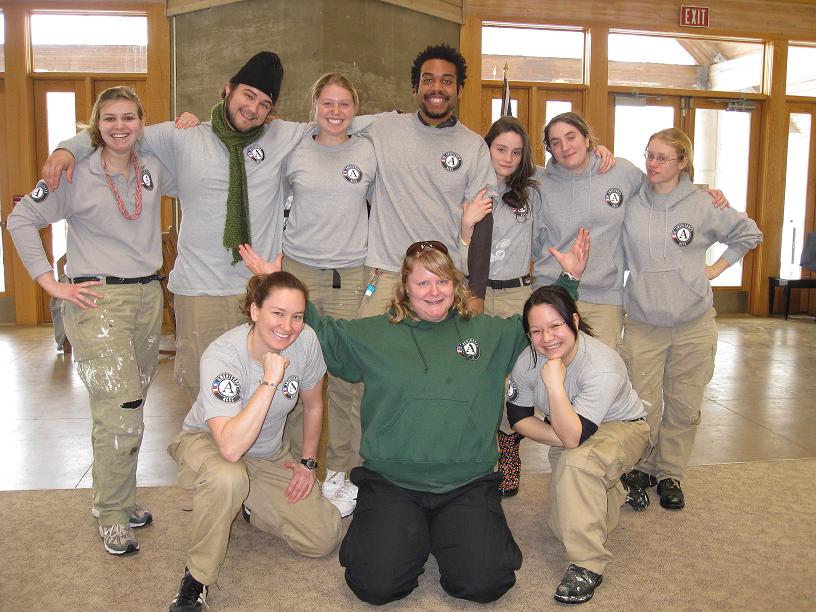 In my last email home, I talked about my desire to work more directly with people in need as opposed to playing a smaller, more detached role in the larger picture by say, lighting the prairie on fire or installing door trim. My time at Sherman Lake definitely exceeded my expectations in this regard and reminded me why I’m subjecting myself to an AmeriCorps life with a curfew, subzero temperatures and mandatory physical training sessions that lately have included a “Hip Hop Abs” video and a Zumba dance class. (During both sessions there was screaming laughter followed by the words, “Watch Marea!”) I really felt like I made an impact at Sherman Lake and I was able to do it in a short period of time.
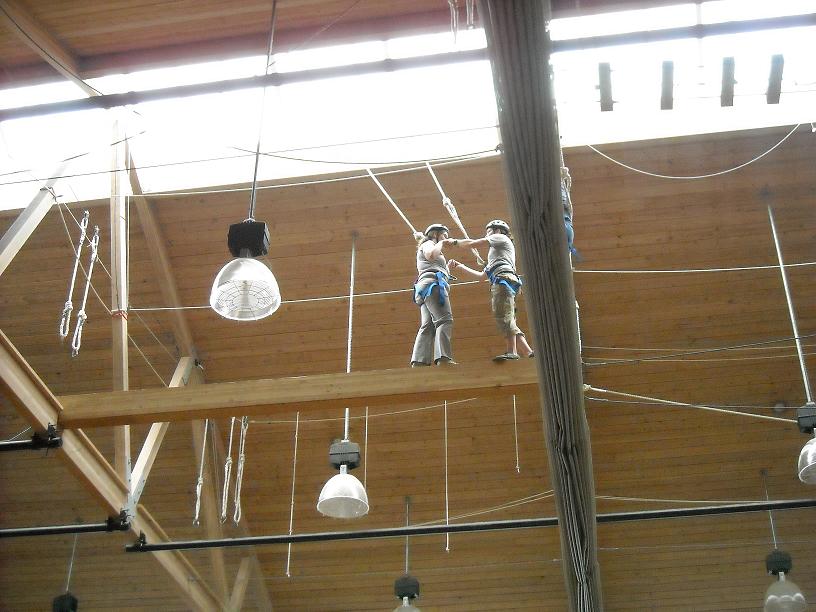 Working at Sherman Lake also gave me the opportunity to grow personally. Having to be such a visible role model of the camp’s principles also made me seriously evaluate their presence in my own life. I feel very fortunate to have had a project that not only made me feel like I contributed but also reminded me that I can still become a way better person.
This week my team started work on the first half of our fourth and final project. For the next three weeks we will be living in Vinton and working at Usher’s Ferry, a historic village in Cedar Rapids with restored buildings from the late 19th century. The village, which aims to preserve the character of small town Iowa and serves as a center for community recreational events, was severely damaged in last year’s flood. We are gutting and making exterior repairs on the house that acts as the administrative office.
On March 29 we will be relocating to Valparaiso, Indiana to work with the United Way rebuilding homes that were destroyed by floods. If you were concerned that I didn’t learn any new gay skills as a camp counselor, you will be relieved to know that we will be primarily hanging drywall in Indiana which I’m sure will more than make up for my lack of tool use last round.
My last piece of news is that my team leader is leaving the program a few weeks early to start a new job and I will be moving into her position. It won’t be a huge adjustment since I assumed this role when our team was split during our second round project, but this time AmeriCorps is insisting I make the full transition into the job. This means:
1) I will now wear an unflattering green shirt instead of an unflattering gray shirt.
2) I will receive a significant raise which will provide a much needed contribution to the Marea-has-no-job-after-AmeriCorps-but-would-like-to-pay-rent fund.
3) I will have to abide by the team leader rules, which means I can’t drink with my friends, most notably on my birthday or during the ten days leading up to our graduation which I imagine is a total shit show. Boo. I almost turned down the position for this reason but after a lot of soul searching I decided that when you’re almost 25, you’re too old to put a week of drinking over a significant amount of money and a career opportunity.
I’m coming down the home stretch! I leave Vinton for good on May 1 and am hoping to shoot over to the east coast for a tiny tour before heading back to California. If you’re in the San Diego area and hear of any good job opportunities for a former public servant with a random set of construction skills and social science degree, let me know. I work for cheap and can supply my own khaki work pants.
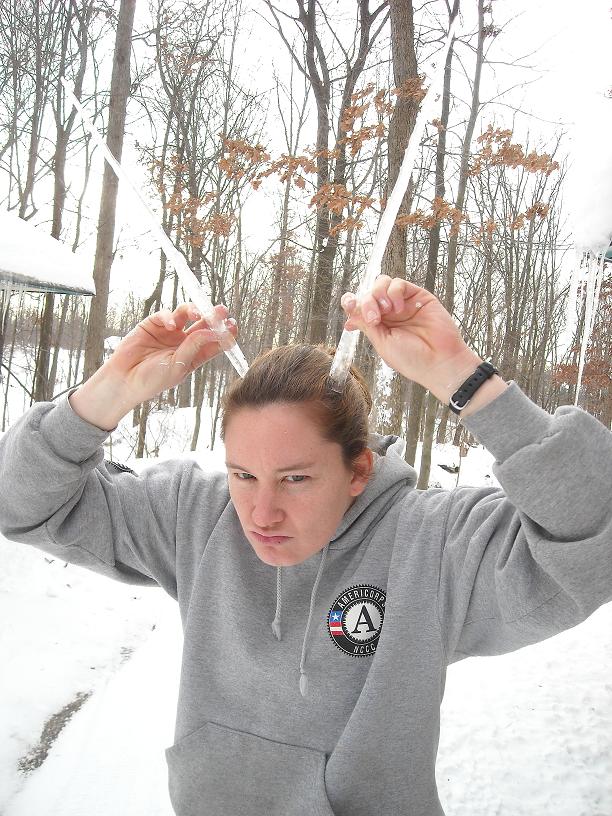
Unfortunately I couldn’t take pictures with my campers for liability reasons, so I hope you believe from the photos included that I actually worked with children.
I miss you all so much and I’m very excited to come home!
Love,
Marea
 Occupation: Cubicle Monkey