Dear America,
Let’s take a few moments to consider all the sacrifices I’ve made for you over the last ten months. For nearly a year, I subjected myself to abject poverty, scabies exposure, Sizzling Salsa workout videos and subzero temperatures. I wore khaki cargo pants for you America! I went for weeks at a time without cable! I spent more hours wandering the aisles of Wal-Mart than I spent with all the members of my family combined, and I did it for you! These extra ten pounds are for you, U-S-A! Don’t bother thanking me, I did it out of the goodness of my heart.
My selflessness and saintliness yielded many successes for you of course. I hate to brag, but we’d be kidding ourselves if we pretended that my mere presence in Iowa wasn’t the primary reason for its recent decision to allow gay marriage. Furthermore, there are countless small town bartenders who have drastically increased their repertoire of available shots, and again, I’d be fibbing if I said it had nothing to do with me. Many of these same bartenders are now prepared should someone request the proper implements for a rousing game of flip cup, and there are AmeriCorps members returning to their home states with a newfound appreciation for the tradition of “knucking it up”. You’re welcome! There are also at least twenty AmeriCorps members who can now brag that they’ve played rugby, but if you should face them in competition, please don’t blame me if the only rule some of them know is to pass the ball backward; I did the best I could with the varying levels of athletic experience.
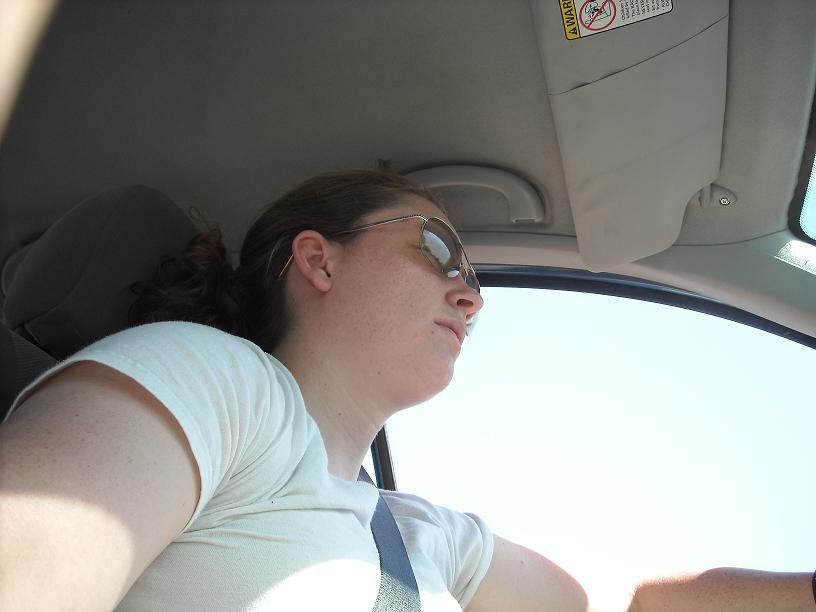
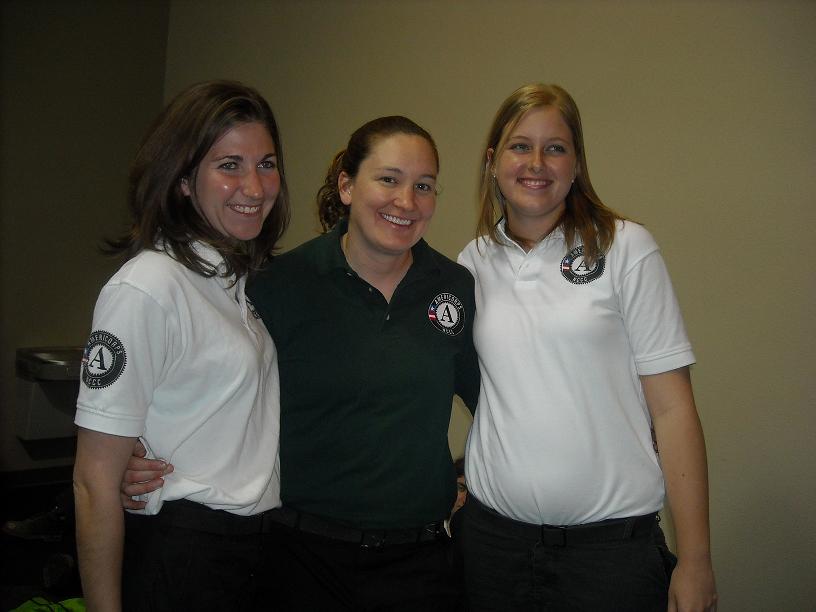 I’ve done all I can to change you for the better, America, and with sadness, I am sending one more email update to report that my experience has finally come to an end. On May 1, after a program director I worked closely with all year long announced my name using its least desirable mispronunciation – “Mariah Blue” – I walked bitterly across the stage at my AmeriCorps graduation and received my certificate of completion. I am currently meandering back across the country as I do not yet have a job to rush home to.
…A quick recap of my final two AmeriCorps projects…
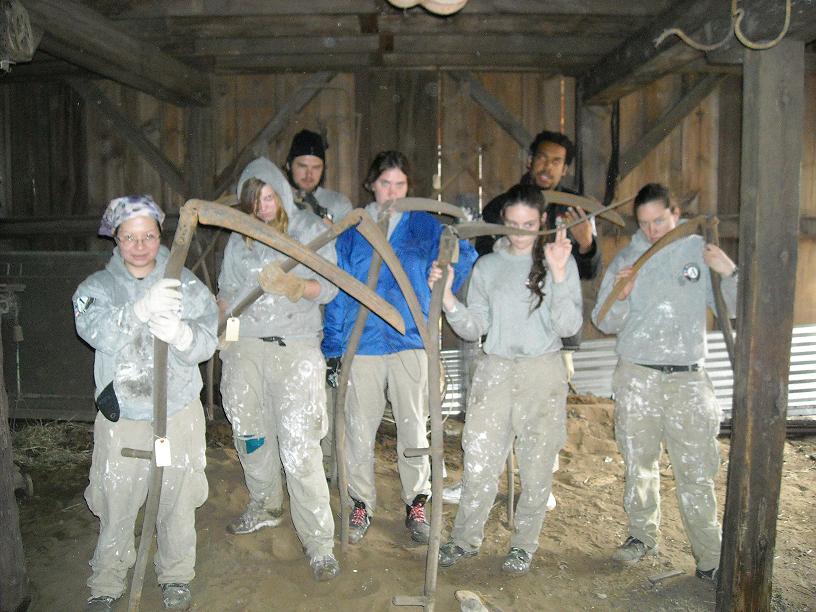
For three weeks in March we worked at Usher’s Ferry, a historic village in Cedar Rapids, Iowa with authentic houses and businesses that replicate small town Iowa between the years 1890 and 1910. Usher’s Ferry was hit hard by the flood, so much of our project involved moving rusted antique farming equipment from one building to another and scraping paint off an old house that we eventually repainted. It was hard to feel passionate about this project since a twenty year span in the history of a state I wasn’t born in isn’t particularly interesting to me and, given all the devastation caused by the flood to people’s actual homes, restoration of what seemed like a creepy ghost town didn’t seem like the most compelling of needs. However, the enthusiasm of our very eccentric sponsor Darrin, who often rocked antique driving goggles, kimonos, leather vests and other apparel oddly appropriate for a small town Iowan historian, really motivated me to do my best. I can’t imagine picking through the destroyed remains of the last twenty years of my professional career and being willing to start over again from scratch, but Darrin not only went forward without hesitation, he did it with a positivity and optimism that I really admired. Which caused the following revelation:
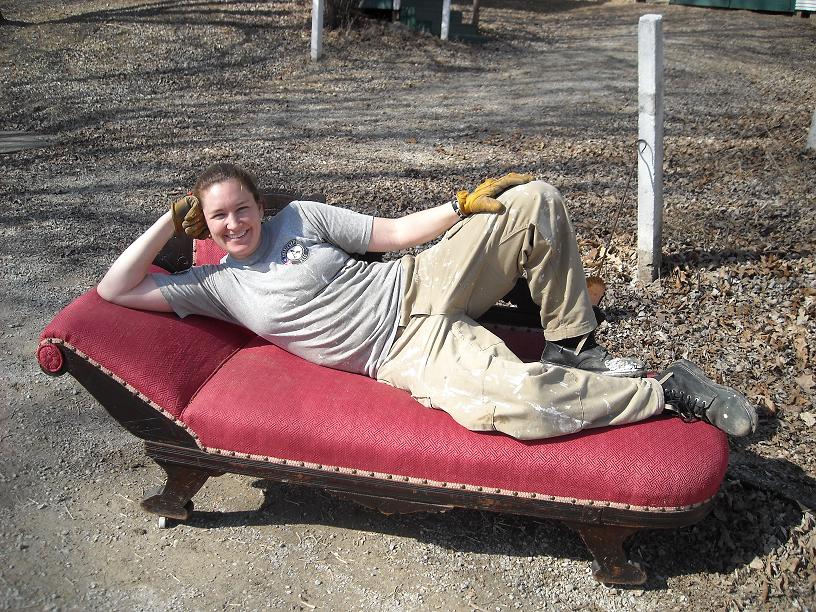 Feeling connected to a project because of the compassion I felt toward our sponsors as opposed to the populations they served or the missions for which they stood was something that surprisingly characterized my AmeriCorps experience. Before I left for Iowa, when I pictured “helping people” I had an image in my head of mangy homeless men and children with distended bellies; it was good for me to learn that public service extends beyond subjects of a Sally Struthers commercial and can be motivated by factors other than a bleeding heart or a passion for the “cause”.
For our second project we traveled to Northwest Indiana to help gut and repair homes damaged by the floods that ravaged the area in September. I did get to learn to hang drywall (another dykey construction skill – check!) but spent most of my time in people’s molded basements tearing out walls and flooring, further increasing the likelihood that my AmeriCorps experience will stay with me forever, probably in the form of an incurable disease.
One of the most interesting things about having our last project split between two flood damaged areas was getting to observe the difference between the two affected communities and how they handled their respective disasters.
In Iowa, it seems like the community bonded over the flood. We had a community volunteer day at Usher’s Ferry and fifty people donated their Saturday even though we had only advertised on local television a few nights before. I commented on the turnout to one of the volunteers and he explained to me that so many people helped him when his home was flooded that he tries to return the favor to every chance he gets. Another woman talked passionately about the spirit of Iowans, how hardworking they are, how resilient. The flood to Cedar Rapids was an obstacle they overcame, demonstrating their character as a community. Amidst the devastation – rows of abandoned homes with yellow condemned slips tucked in the screen doors and debris and stacks of ruined belongings still lining the streets almost a year after the flood – there is pride and hope.
In Indiana, we only encountered bitterness. One of the primary complaints of the home owners we talked to is that no one came out to help them. FEMA gave too little, their churches didn’t do enough, their neighbors had their own problems; so many homes were affected, but they were all fighting separate battles. They also felt abandoned by the country. Northwest Indiana has next to no media market – almost all the newspapers, radio and television stations are based out of Chicago – so the flood got almost no coverage. 80,000 homes were damaged – a number comparable to the scope of Katrina – but since no one really heard about it, there wasn’t a similar rush of volunteers or government aid.
For this reason, working in Indiana was more rewarding than working in Iowa. The people we worked with reminded us often that what we were doing was important simply because our presence gave people hope. Just being there showed that someone gave a shit. People were always extremely grateful for what we accomplished and surprised that we were there at all. Usually when we arrived they would regard us suspiciously – a few admitted later that they thought we were going to be convicts or slow workers because our team is mostly women – but when they saw that we were actually helping, they opened up and were extremely grateful.
While we were in Indiana we stayed in the rectory of a Catholic church in Gary. One of my biggest challenges in AmeriCorps has been learning to appreciate the shades of gray that characterize most people rather than making snap judgments and immediately dismissing them. This was never so true as it was living next door to a congregation that lovingly stocked our fridge and cupboards with homemade casseroles and baked goods but also had an excessively large memorial to aborted children in front of their place of worship.
It was nice living in an urban area for the first time during my AmeriCorps experience. I even enjoyed the traffic a little because it reminded me of home; the most congestion you get in Iowa is a combine taking up both lanes of the highway during the harvest. I used to like to yell “rush hour!” in Western Iowa on the rare occasion that another car would stop opposite of our van at a dirt road intersection on the way home from work.
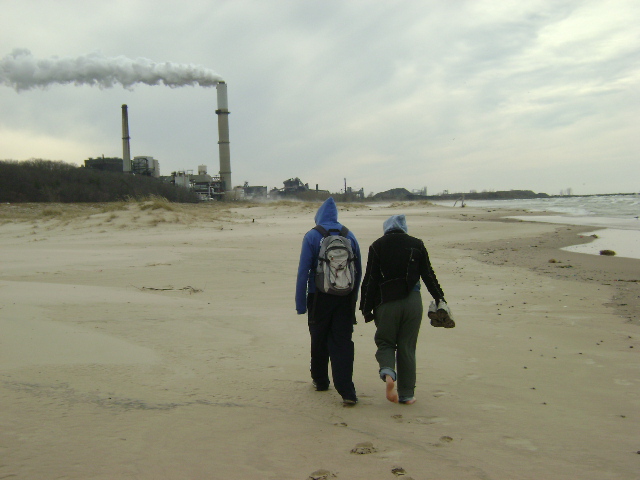 Gary itself is sort of a sad place though. It’s a city based around the steel mills on Lake Michigan and the community has suffered greatly from the decline in the industry. Our first day we took a tour with a Gary native named Tracy who wanted to combat the negative rap Gary gets as a result of its reputation as the violence capital of the world. “All those drive-bys you hear about, those are people coming down from Chicago and actin’ the fool. In Gary, if we gonna shoot you, we’ll get up in your face,” Tracy said reassuringly.
Some helpful hints if you ever visit Gary:
1) Don’t sing the Music Man song “Gary, Indiana”. I know it’s the first thing that pops into your head, but it understandably drives Gary residents batshit bonkers. It’s kind of like how I feel when substitute teachers sing “Maria” from West Side Story to me. Don’t think you’re the first person to think of that really funny joke, and btw, that’s not even my name, asshole.
2) I know the second thing Gary reminds you of is the Jackson 5, but apparently that’s sort of a sore subject too. I spent the first several hours of our Gary tour waiting in eager anticipation for Tracy to take us by their childhood home or something, but when it became clear no such stop was planned, I timidly asked about them. Tracy snapped at me: “No one likes them around here. So fucking rich and never gave shit back to Gary”. I almost suggested that maybe the reason is because they associate Gary with their abusive, money grubbing father, but decided an argument based on what I learned for a made-for-TV VH1 movie is never very strong.
I almost didn’t send this email because I couldn’t figure out how to close it. I feel like I should share some profound revelations and sum up my experience in a meaningful way, but I haven’t really had enough time to fully digest it myself yet. So instead, I’m going to end with some of my usual superficial revelations:
1) I don’t know why a devotion to public service is often accompanied by a decline in personal hygiene and appearance, but there is indeed a correlation that is too statistically significant to ignore. Before our first project, the male corps members made a bet about who could go the longest without shaving and returned to Vinton two months later looking like a band of unruly yetis. Sadly, the beards did not disappear after the contest winners were announced; they stayed on or were just continually reinvented into mutton chops and other unfortunate forms of facial hair for the remainder of the year. The women were no better. It was not long before leg and armpit shaving lost its urgency, and dreadlocks began to sprout on blonde heads where dreadlocks have no business being. Admittedly I had a moment of weakness during our first project where I thought, “Hot water is so scarce and I’ve seen nobody but my teammates for weeks. Why not forgo this silly ritual and spend the extra time sleeping?” I quickly realized that this was just a slippery slope into granola dyke-dom and considering I sweated profusely into the same t-shirt five days a week in order to keep one of my AmeriCorps shirts “nice” for special events, this extra ten minutes once a week was not much to sacrifice in order to keep from descending into total nastiness.
2) Throughout my travels, I’ve found that coffee shops are wonderful little bubbles of sameness wherever you go. As long as I can find a tattooed and/or pierced individual with subpar customer service skills and a slightly bored/superior attitude who can serve me a Chai latte while I access the internet, I can feel at home in any state.
Thank you all for tolerating my essays over the last ten months, I’ve really enjoyed writing them. I really did have an amazing, meaningful experience and I would love to have a deeper conversation about it, but I’m going to see many of you in less than forty-eight hours and would much rather discuss it over a beer. You pay, I’m a little low on funds right now. For YOU America.
Love,
Marea
 Occupation: Cubicle Monkey