As a student of Urban Studies (a major I damn near completed) at UCSD, I was introduced to the concept of “tourist bubbles”: urban spaces designed to give visitors an “authentic” regional experience while keeping them comfortably separate from the yucky parts of a city that might compel them to reach less frequently into their fashionable money belts. A vacation in a tourist bubble is like a Small World-type theme park ride; tourists are transported on a track by the city’s most impressive landmarks and dancing stereotypes of its citizens, circumventing anything that may expose the interworkings of the ride, such as poverty, urban decay or actual residents.
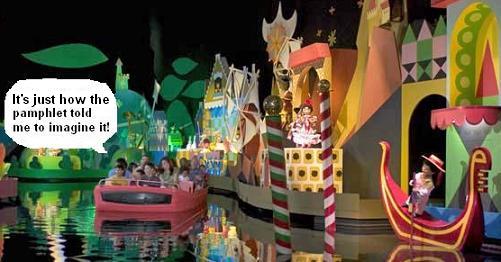
The concern, from an urban studies perspective, is that the needs of the city’s underprivileged population go unnoticed as taxpayer dollars funnel into the development of these tourist reservations. The concern, from my perspective, as I just returned from a trip to Europe, is that if you’re not careful, tourist bubbles can make for a shitty vacation.
When planning the Ireland leg of our tour, we decided to skip Dublin because we thought it would be a “typical” big city: good museums, famous bars, important buildings – cool, but same shit, different accent. Instead, we opted to fly into Cork and then drive to Killarney. We had no misgivings about the tourist presence in this part of the country as Killarney is home to a national park and a starting point for the very famous Ring of Kerry scenic route. Still, we thought that amidst the Tevas and flailing maps we’d somehow experience a quality more uniquely…Irish.
However, as we walked through the streets of Killarney our first day, I found myself wondering, “Am I in Ireland, or Mission Beach?” Is eating in O’whoever’s “traditional” Irish pub and buying a trinket from a shop that looks like a leprechaun just tossed his cookies any different from buying an “I heart surfing” tank top and having a churro at Sea World and thinking I’ve experienced the real San Diego?
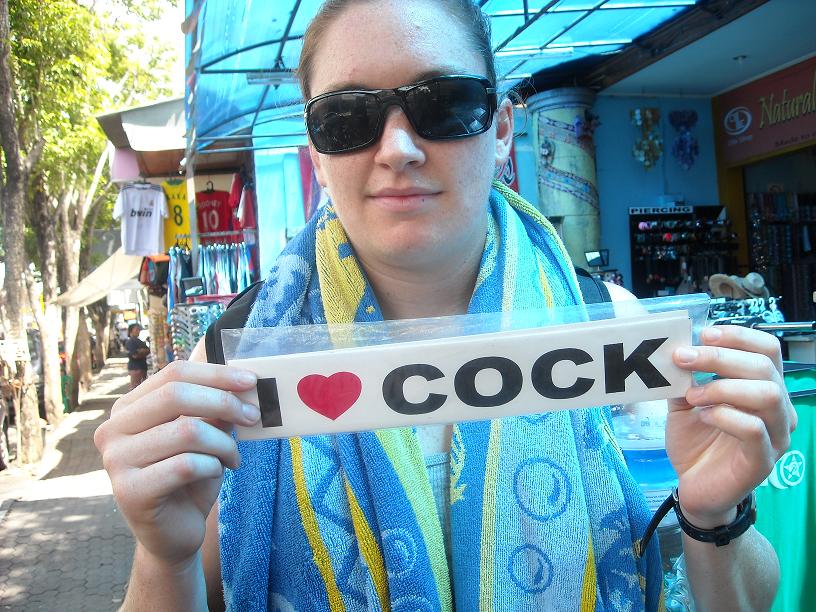 I felt the same way last January when I went to Kuta beach in Bali and sifted through stall after stall of “handmade” jewelry and “genuine” Balinese paintings of beach scenes. Did I really go halfway around the world to buy crap made in China and giggle at crude bumper stickers printed in English? Is the awkward, ESL phrasing of a “No skinny my dick” sticker enough to make my travel experience novel or exotic?
In both Killarney and Kuta beach, I felt no real sense of discovery. I felt like I was traveling in the Star Tours ride at Disneyland; there is a sensation of movement but the only thing that actually changes is what they’re showing on the screen. And the program being shown is a highlight reel of tourist “must-sees”, tidily surrounded by commemorative crap and photo ops to prove that you “must-saw” it.
 On the other hand, what is an “authentic” Irish experience anyway? Is there an old castle somewhere, nestled in a field atop a cliff, overlooking the vast expanse of a strikingly blue ocean? Is there a pub the next hill over, full of toothless old Irish men in felt hats, with accents so thick that I am unsure if they are speaking English? Could I eat Shepherd’s pie and drink Guinness at this pub until the old men erupt into an inevitable drunken jig and/or brawl?
I’m guessing not. And if this scene does exist, it’s unlikely that no one has identified its economic potential and fenced it off, put a picture of the toothless, jiggging men on a t-shirt and charged a 25 euro entry fee.
Does an “authentic” experience outside of what the tourism industry has created even exist after globalization, for that matter? Is our very perception of “authentic” limited to the imagery of a tourist bubble?
This rant has a happy ending. I wrote most of this in a pessimistic haze the day we arrived in Ireland. So far we had been screwed over by the rental car company, gotten lost several times on the infinitely confusing and unmarked Irish roadways on the way to Killarney, and struggled to find parking near our hostel, which was inexplicably closed between the hours of 12 and 4. Then we were rewarded for our trouble by arriving at a final destination that seemed to have been victim to some sort of tragic clover explosion.
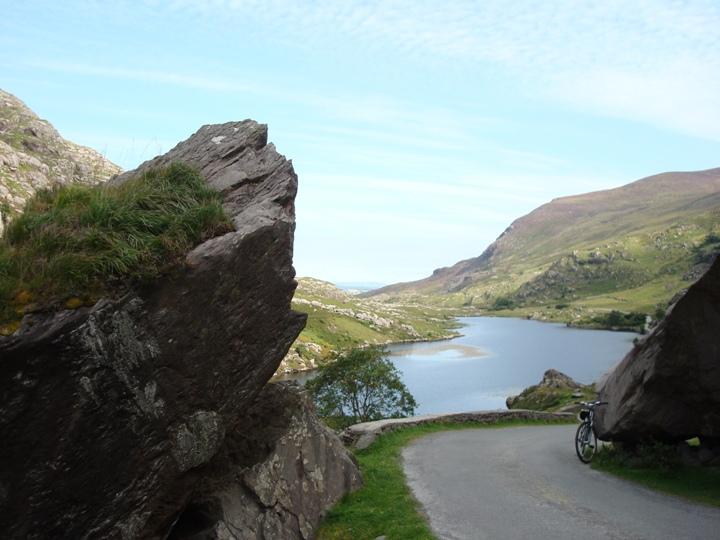
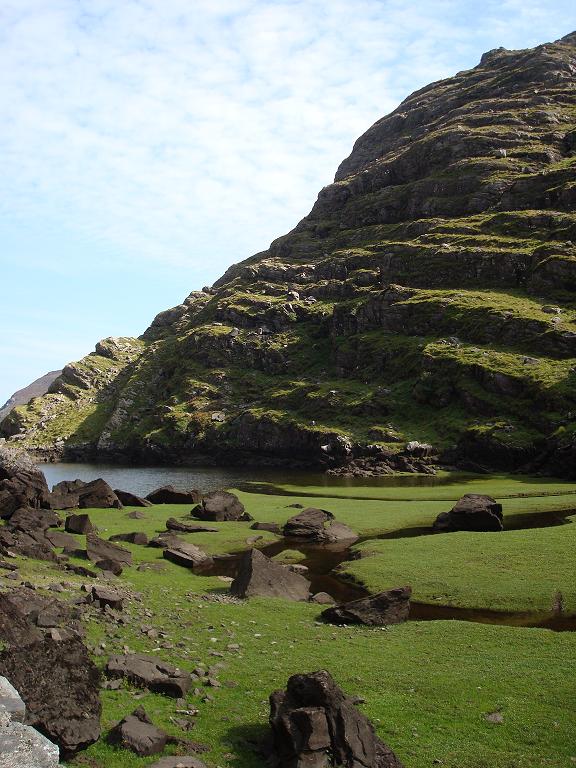 The following day we decided to forgo the Ring of Kerry drive, one of Ireland’s most popular tourist attractions, and instead bike the 27 miles or so through the gorgeous Gap of Dunloe in Killarney’s national park. A few revelations from this retrospectively genius decision:
1) Most tourists are really lazy, and it pays to take advantage by going places that require a little extra effort or physical exertion to reach. I read quite a bit about the Gap of Dunloe before our trip, and not one blog or pamphlet suggested biking the whole loop, as opposed to taking a ferry or hiring a car or buggy for a considerable portion of it. I definitely wouldn’t say the Gap of Dunloe is off the beaten path, but as we got deeper into areas where buggies, tour buses and cars seldom go, at the height of tourist season, we saw maybe ten other people. And despite what my travel companion Jiji might tell you (her name has been changed to protect her identity), it really wasn’t that strenuous a ride.
2) If you visit a destination hoping to experience authenticity based on a notion you have forced upon it, you are bound to be disappointed. Appreciating natural beauty frees you a bit from these expectations. I immensely enjoyed our bike ride simply because we were outdoors and it was beautiful, not because it fulfilled a particular stereotype I had imposed on the experience. I had the same revelation during the latter half of my Bali trip, when we rented motor bikes and cruised north for hours through the countryside, far away from the penis-themed bumper stickers. If you can see it for what it is, the natural environment is a destination’s most authentic feature. Cultures can evolve, become indistinguishable or be completely contrived by the tourist bubble. We do a damned good job of destroying and exploiting nature too, but at the end of the day, its magnitude puts it outside the realm of human manipulation.
 Occupation: Cubicle Monkey
I will take this wise advise as I continue my journeys through Europe. Thanks! 🙂 Keep up the great blogging entertainment. Really.
I’m actually taking a class right now called Environmental Management of International Tourism Development (I had to look it up) and besides labeling 99% of tourism as the devil, it echoed some of your sentiments regarding socioeconomic effects of tourism on poverty and cultural loss. Interesting. Maybe I will use you for a source in my final paper. I’m sure it would raise my grade.
Yay! Happy ending!
Another great blog! It would be interesting to go live in a foreign country and compare tourist/resident experiences. Plus, I could come visit!
I’m pretty sure you just encouraged me to leave the country with this comment. Quite a departure from the complaints about me moving all the way to the bottom of California…
I was just being polite. I really meant, “I could come live with you!” . And, I get points for encouraging you to do something you might like to do even though it would be very hard on me. Boy, it’s harder and harder to get Good Mom points around here.
His legs flail about as if independent from his body!!
Sorry, couldn’t resist :o)
Who is this mysterious Jiji you speak of? She sounds like a big weenie.